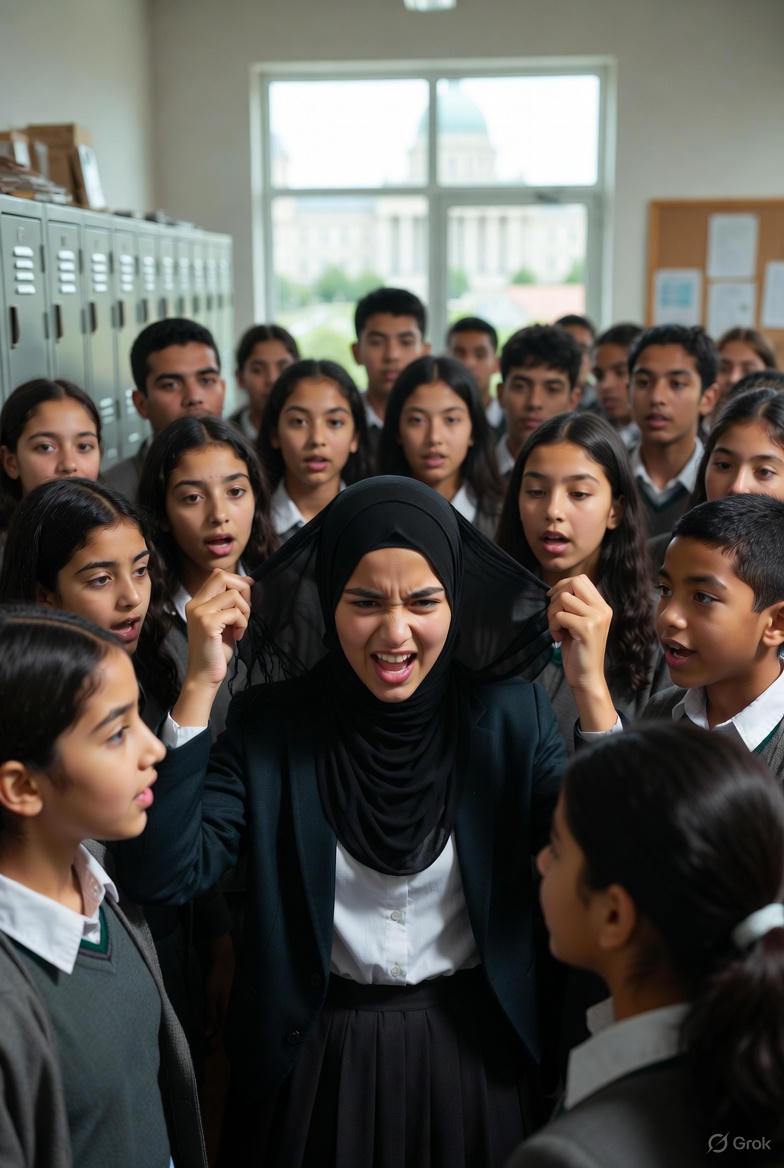
On December 11, 2025, Austria’s National Council, the lower house of parliament, voted to pass a new law banning headscarves for schoolgirls under the age of 14. The vote took place during a parliamentary session on that Thursday. This measure targets “traditional Muslim” head coverings like hijabs and burqas in all public and private schools across the country. It’s estimated to affect around 12,000 young girls, mostly from Muslim families.
The law was backed by a broad coalition, including the conservative Austrian People’s Party (ÖVP), the Social Democratic Party (SPÖ), and the liberal Neos party. Even the far-right Freedom Party of Austria (FPÖ) supported it, but they called it too limited and pushed for a full ban on headscarves for all students and teachers, saying “political Islam has no place here.” The only party against it was the Greens, who argued it’s unconstitutional and could stir up anti-Muslim feelings.
Government officials say the ban is about protecting young girls from oppression and promoting gender equality. For example, Integration Minister Claudia Plakolm from the ÖVP described the headscarf as a “symbol of oppression.” Neos leader Yannick Shetty added that it’s not against religion but helps shield girls from being sexualized or pressured. Education Minister Christoph Wiederkehr noted that some girls face family or peer pressure to wear it, and the law supports their personal growth.
This isn’t Austria’s first try at such a rule. Back in 2019, under a different government, they banned headscarves for girls under 10 in primary schools. But in 2020, the Constitutional Court threw it out, saying it unfairly targeted Muslims and broke rules on religious neutrality and equality. Now, lawmakers claim they’ve fixed the wording to avoid that problem, but many doubt it will hold up in court again.
Reactions have been strong and mixed. The Islamic Religious Community in Austria (IGGÖ) called it a human rights violation that could divide society and stigmatize kids. They plan to fight it in the Constitutional Court right away. Amnesty International warned it adds to racism against Muslims and won’t really help girls. Women’s rights group Amazone said it sends a bad message that outsiders can decide what girls wear on their bodies. Experts like Farid Hafez from Georgetown University see it as part of a bigger wave of Islamophobia in Austria, distracting from economic issues like the country’s budget deficit. On social media, posts highlight worries about religious freedom and discrimination.
The ban won’t kick in right away. There’s a soft start in February 2026 to educate teachers, parents, and kids about the rules. Full enforcement begins in September 2026, at the new school year. If someone breaks it, schools will first talk to parents. For repeat issues, youth welfare agencies get involved, and families could face fines from €150 to €800.
This law comes at a time when Austria’s government, formed after far-right election gains in March 2025, is focusing on integration and cultural policies. Critics fear it could make Muslim families feel unwelcome and widen social gaps, while supporters see it as a way to ensure all kids have equal chances without religious pressures. With a court challenge likely, the future of this ban remains uncertain.
In my view, Austria’s decision to ban headscarves, is hailed by supporters as a crucial measure to safeguard young girls from potential oppression and promote gender equality by viewing the hijab as a symbol of female submission rather than free choice. This policy fosters integration into secular societies, ensuring children assimilate shared European values without religious divisions, while enhancing communication in classrooms through visible facial expressions and eye contact. By prioritizing secularism and security, such as easier identification, it upholds neutrality in public institutions, a principle already embraced in countries like France and Denmark, making it a model for all EU nations to adopt for cohesive, empowered communities.
Leave a Reply